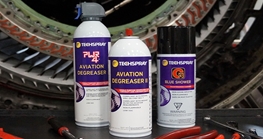
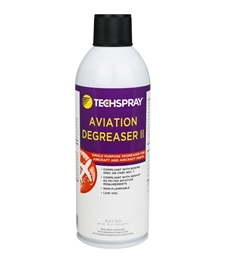
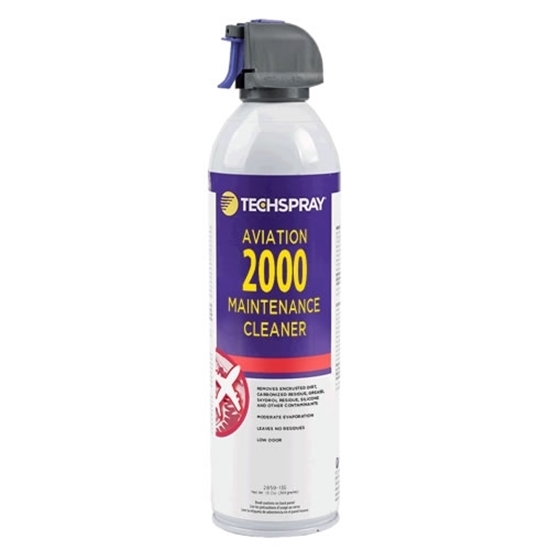
Aviation 2000 Degreaser

High pressure cleaner to quickly flush out grease & other soils

Part # Name Size Units
Per Case
Price
Per Case
Case
Qty
 
2859-13S Aviation 2000 13 oz (369g) 12 $151.44
Packaging Order minimum case quantity only. Extra shipping fees may apply.
Order from an authorized distributor
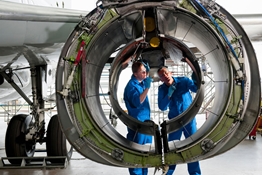
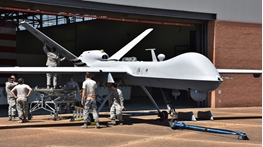
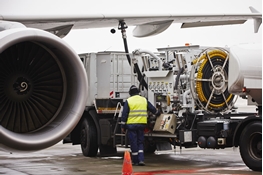
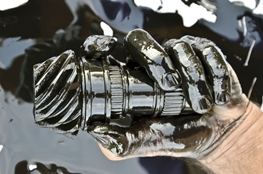
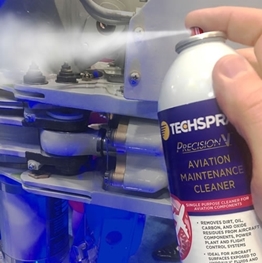
Quickly blast away encrusted dirt, carbonized oils, grease and Skydrol from aircraft engine housings, parts and avionic components. Can be used as an electronic contact and plug cleaner for non-energized equipment. Excellent wetting action lifts and removes soils from the tightest areas. 

Specifications: Airbus AIMS09-00-002, Boeing BSS7432, Douglas CSD No.1
Call-out: Delta Airlines 032202071, GE Aircraft Engines/ Commercial Engine Standard Practices Manual Subtask 70-16-80-700-093 (Apr 01/2006) Suitability Test of Temporary Marking Products 
 

Features & Benefits

  • Trigger allows for greater control of spray, providing a throttling action for better controlled cleaning
  • Moderate evaporation for soak-in time
  • Zero residue
  • Low toxicity - does not contain n-propyl bromide
  • Does not contains CFCs, HCFCs or chlorinated solvents
  • Meets EU F-gas requirements
  • 360° valve sprays upside-down
  • Extension tube included for pin-point accuracy

FAQ's

How do you know the safe exposure limit of a degreaser, contact cleaner, or flux remover?
The personal hazard associated with a solvent is often defined using Threshold Limit Value (TLV), which is the recommended average exposure in an 8-hour day, 40 hour work week. The lower the TLV of a particular substance, the less a worker can be exposed to without harmful effects. TLV is stated on the SDS of chemical products, in additional to recommended personal protection equipment (or PPE). The threshold limit value of a solvent is generally set by the American Conference of Governmental Industrial Hygienists (ACGIH). The unit of measure is Parts Per Million (PPM).
How do you use an aerosol cleaner?

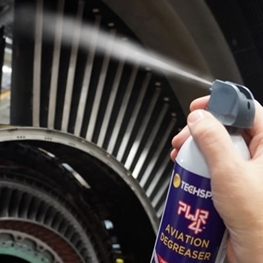
Hold object to be cleaned in vertical position. Pull trigger gently to control solvent flow rate. Spray from top to bottom, allowing the liquid to flush away contaminants. 

How do I properly dispose of an aerosol can after it is empty?

It may be different state-by-state, so contact your state environmental agency for regional specific regulations. For a general guideline, here is the process according to EPA hazardous waste regulations 40CFR. The can has to be brought to or approach atmospheric pressure to render the can empty. Puncturing is not required, only that it “approach atmospheric pressure”, i.e. empty the can contents until it’s no longer pressurized. This insures that as much contents as is reasonably possible are out of the can. It is then considered “RCRA-empty”. At that point it can be handled as any other waste metal container, generally as scrap metal under the recycling rules. Note that the can is still considered a solid waste at this point (not necessarily hazardous waste).

Articles

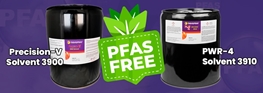
PFAS Free Solvents: The Future of Safe & Effective Cleaning
Switch to PFAS free solvents from Techspray for safe, nonflammable cleaning power. Explore Precision-V 3900 & PWR-4 3910 today.
Read This Post

Responsible Manufacturing and Handling of PFAS
New research reveals PFAS risks to health and the environment. Manufacturers must adopt best practices to manage these chemicals responsibly.
Read This Post

Cleaning Solutions for Flap Tracks, Slat Tracks, and Other Wing Components
There are few things more unsightly than finding grease smudged all over your wing, especially on your flaps and ailerons. Not only does it look bad, but it can permanently tarnish your paint finish. Let’s dig into this grimy topic and see what we can do about making it a little less of a problem.
Read This Post

More Articles
You did not finish submitting your information to request a sample