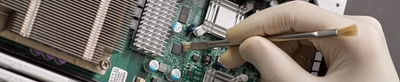
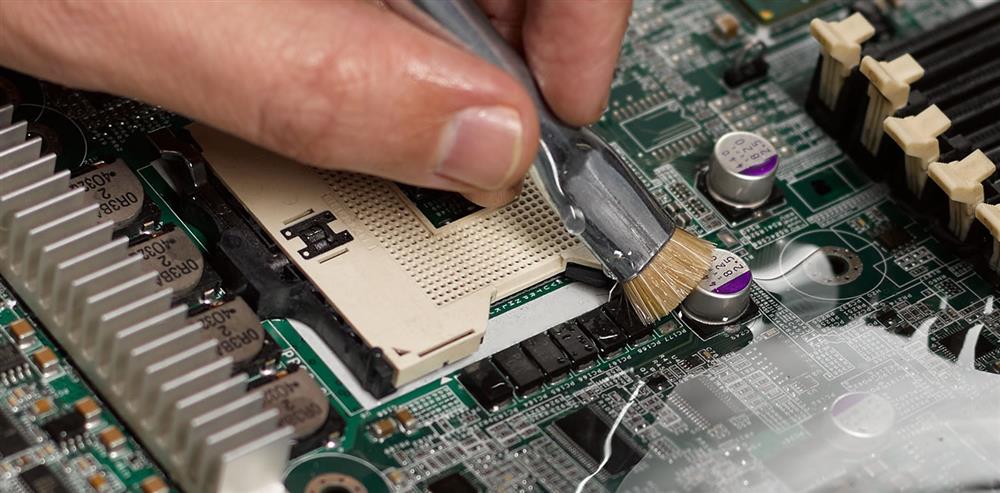
When cleaning sensitive devices and electronics, including printed circuit boards, the safest method is to allow the solvent to do its job without additional agitation. Unfortunately, with oxidation, heavy greases, and other tenacious soils, there is no substitute for a technical cleaning brush.
This guide covers brush specifications, bristle types, and special considerations when working with precision cleaning brushes.
Interpreting Brush Design Specifications
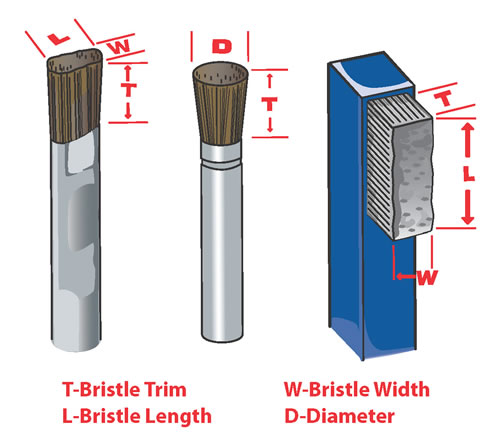
When selecting a brush for your application, the first challenge is to interpret the dimensions. Brush dimensions are expressed in length (L), width (W), and trim (T).- Length & Width: Length and width are the dimension of the bristle groupings, and impact the amount of cleaning precision possible from the particular brush. Small brushes, similar to fine art paint brushes, are available for cleaning dense circuit board designs. Brushes are also available for larger applications, like sweeping debris from broad surfaces.
- Trim (Stiffness): Trim is the length of the bristle from the handle, which directly affects the touch or stiffness of the bristles. Shorter trimmed brushes generally have a firmer touch and are better for more aggressive cleaning. Bristles are often trimmed straight, but can be trimmed in a rounded, or conical shape, and even angled. Techspray offers brushes that are angled to a point, for cleaning that is both precise and aggressive.
Choosing the Right Bristle Material
The type of bristle has a major impact on whether a brush is better for fine work, like conformal coating touch-up, or aggressive scrubbing.
| Bristle Type | Stiffness & Characteristics | Best Used For |
|---|---|---|
| Goat Hair | Fine, soft, and fairly inelastic. Naturally kinked and static neutral. | Normally used for short bristled brushes like for cosmetics and in "acid" brushes commonly used for applying conformal coating in quality control rework. |
| Horse Hair | Slightly stiff, durable, absorbent, and static neutral. Note: Not resistant to acids or alkalis. | Allows for dry cleaning without the risk of scratching and carries away liquids in a cleaning process. |
| Hog Bristle | Stiffer than horse hair, very durable, water resistant, and static neutral. | Ideal for more aggressive scrubbing. |
| Brass Wire | The softest metal available for brushes. Conductive for static dissipation. | Used for more aggressive cleaning, burnishing, non-sparking static dissipation, deburring, and finishing work. |
| Stainless Steel | Very corrosion and heat resistant. Conductive. Note: Do not use with sulfuric acid or certain inks. | Very aggressive cleaning, deburring, removing rust, and surface roughing (like preparation for epoxy adhesive). |
Quality, Cleanliness & ESD Safety
Avoiding Hair Loss & FOD
A frequent complaint with brushes is hair loss, which is a common problem with low cost, disposable brushes. A cheap acid brush used in quality control retouch of conformal coating can actually lead to FOD (foreign object debris), a defect than can actually reduce the service life of electronic devices. Wire drawn, or hand laced brushes are made by sewing the brush filaments into place with metal wire or nylon cable, tying it around the middle of the bristle, and locking it into the core. This requires extensive labor. Techspray's cleaning brushes are securely stapled in place, eliminating loose hairs.
Cleanliness of Natural Bristle Brushes
Techspray takes special care to ensure our natural fiber brushes are clean and free of contamination. The horse and hog hair used in Techspray brushes are "dressed", meaning cleaned, sterilized, combed, and bundled.
- Horse Hair: Sterilized using steam in an autoclave at 257°F (125°C) or higher, for at least 45 minutes.
- Hog Hair: Sterilized with boiling water or steam of at least 212°F (100°C) for 2 hours or longer.
ESD Effects from Brush Design
When cleaning sensitive electronics, close attention needs to be paid to whether or not a brush can be grounded, or at least not generate a static charge. With this in mind, it is surprisingly common to find consumer-grade toothbrushes on electronic PCB rework and repair workbenches. Natural hair brushes are considered static neutral, so are better suited for sensitive electronics than nylon bristles, like those found in common toothbrushes.
Conductive brush materials, like brass and stainless steel bristles, have surface resistivity less than 1x10^5 Ω/sq or a volume resistivity less than 1x10^4 Ω-cm, so allow electrons to move freely. If both bristles and handle are conductive, brushes are grounded if the operator uses a wrist or heel strap to connect to a common ground point. A common misconception is that conductive brushes cannot generate a charge. If ungrounded, there is still a risk of generating and holding a static charge, which can lead to a damaging ESD event.
Techspray Technical Cleaning Brushes
Techspray Tech Clean brushes are made of premium grade materials.
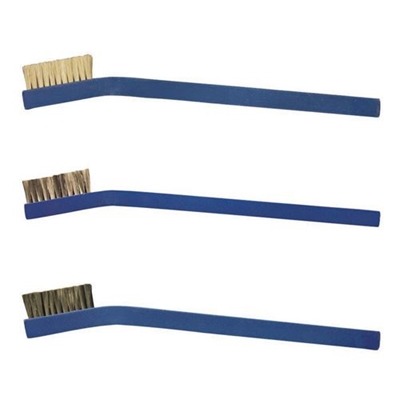
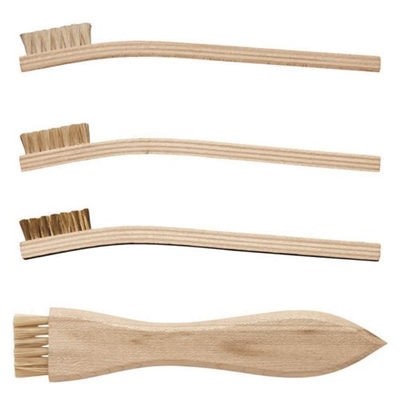
- General Cleaning Brushes: A wide variety of sizes and bristle material for general maintenance cleaning. All handles are made of strong, static neutral wood.
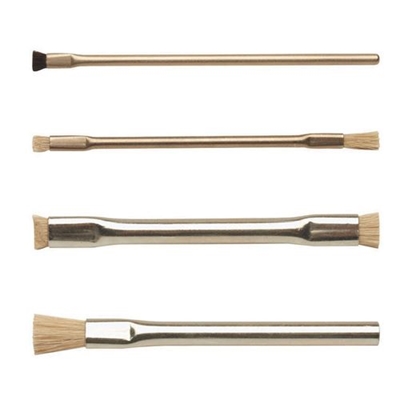
- Static Sensitive Brushes: Ideal for cleaning static sensitive electronics or components. Anodized aluminum falls within the static dissipative range. Steel bristles are conductive, and horse hair is dissipative when saturated with solvent.
- Technical Brushes: Small, precision brushes for technical cleaning and coating or adhesive application. Double-sided brushes include tapered end for tight areas. Five tons of pressure are applied to each metal brush handle to ensure that the bristles remain intact during the most rigorous applications. Bristles securely stapled to prevent bristle loss. Two brushes have horse hair bristles that are trimmed at a tapered angle for cleaning tight areas, like along the sides of a BGA or other low stand-off components.
Brush Attachments for Aerosol Cleaners
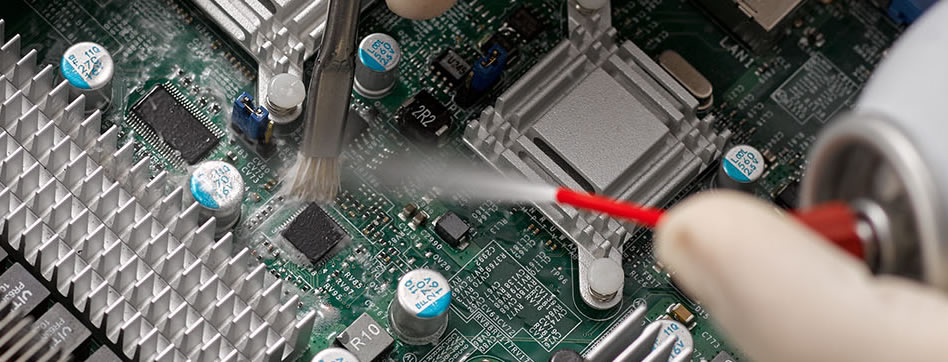
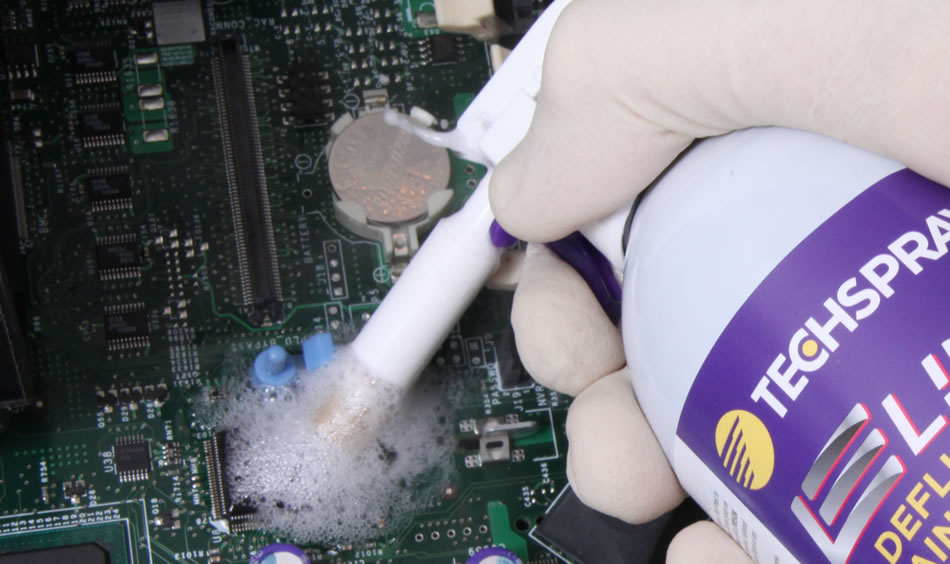
Some Techspray flux removers include a horse hair brush attachment. This fits over the actuator (spray nozzle), allowing the operator to scrub a PCB surface as the solvent cleaner is sprayed. The solvent passes through an embedded needle and then through the brush in a controlled fashion. The end result is more aggressive cleaning with minimal solvent usage. To ensure proper removal of flux residues once they are dissolved and separated from the board's or component's surface, the brush can be used over an absorbent wipe. A final rinse, holding the PCB at an angle to allow for proper flow of the solvent solution, is recommended for critical electronics.
Frequently Asked Questions (FAQs)
Q: Why shouldn't I use a standard toothbrush for PCB cleaning?
A: It is surprisingly common to find consumer-grade toothbrushes on electronic PCB rework and repair workbenches. However, natural hair brushes are considered static neutral, so are better suited for sensitive electronics than nylon bristles, like those found in common toothbrushes, which can generate a static charge.
Q: What is FOD and how do cheap brushes cause it?
A: FOD stands for foreign object debris. A frequent complaint with low cost, disposable brushes is hair loss. A cheap acid brush used in quality control retouch of conformal coating can leave loose hairs behind, creating a defect that can actually reduce the service life of electronic devices.
Q: Can conductive brushes generate a static charge?
A: Yes. A common misconception is that conductive brushes cannot generate a charge. If both bristles and handle are conductive, brushes are grounded if the operator uses a wrist or heel strap to connect to a common ground point. If ungrounded, there is still a risk of generating and holding a static charge, which can lead to a damaging ESD event.
Q: How are natural animal bristles sterilized?
A: The horse and hog hair used in Techspray brushes are "dressed", meaning cleaned, sterilized, combed, and bundled. Horse hair is sterilized using steam in an autoclave at 257°F (125°C) or higher, for at least 45 minutes. Hog hair is sterilized with boiling water or steam of at least 212°F (100°C) for 2 hours or longer. These cleaning processes meet or exceed sterilization requirements of the US Department of Agriculture for manufacturing brushes.