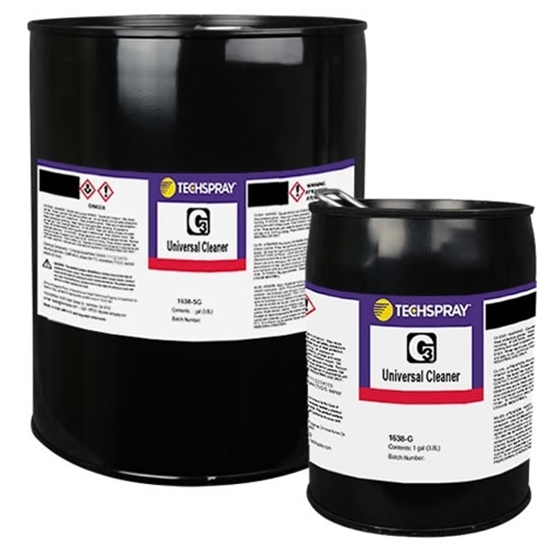




G3 Universal Cleaner

Nonflammable & powerful liquid cleaner

Part # Name Size Units
Per Case
Price
Per Case
Case
Qty
 
1638-G G3 Cleaner - 1 gal 1 gal (3.8L) 1 $533.49
1638-5G G3 Cleaner - 5 gal 50 lbs (22.7kg) 1 $2,136.38
Packaging Order minimum case quantity only. Extra shipping fees may apply.
Order from an authorized distributor

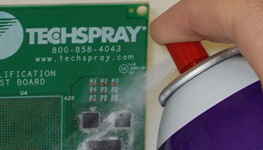
Powerful, non­flammable bulk cleaner that is engineered to remove oils, fluxes and other contamination from electronics using a manual soak cleaning process or ultrasonic equipment.

New improved formula with lower global warming. (click link for more info)

Features & Benefits

  • Powerful cleaner
  • Nonflammable
  • Rapid evaporation
  • Zero residue
  • All-in-one degreaser and defluxer
  • Proven effective for lead-free processes
  • Non-ozone depleting

FAQ's

How do you know the safe exposure limit of a degreaser, contact cleaner, or flux remover?
The personal hazard associated with a solvent is often defined using Threshold Limit Value (TLV), which is the recommended average exposure in an 8-hour day, 40 hour work week. The lower the TLV of a particular substance, the less a worker can be exposed to without harmful effects. TLV is stated on the SDS of chemical products, in additional to recommended personal protection equipment (or PPE). The threshold limit value of a solvent is generally set by the American Conference of Governmental Industrial Hygienists (ACGIH). The unit of measure is Parts Per Million (PPM).
There are a number of regulations prohibiting the use of chlorinated solvents. Should I be concerned with Trans, which is used in many of your nonflammable cleaners?

No, it should not be a concern. Many of Techspray's nonflammable solvents (e.g. G3, Precision-V, PWR-4) contain 1,2-trans-dichloroethylene (Trans, CAS# 156-60-5), which has caused confusion. The regulations controlling chlorinated solvents do not generally pertain to Trans. The following are the reasons: Many are confused with “chloro” substances due to the NESHAP requirements. The big 3 chlorinated substances are Perchloroethylene (Perc), Trichloroethylene (TCE), and methylene chloride. The association of those with all chlorinated substances is not valid. NESHAP requirements only refer to restrictions of emissions of hazardous air pollutants (HAP). Of the nearly 200 substances listed as HAP’s, Trans is not on that list. Reference the following link: https://www.epa.gov/haps/initial-list-hazardous-air-pollutants-modifications. Trans has the same exposure limit (per ACGIH) time-weighted average (TWA) as 2-propanol (IPA) -- 200 ppm. In contrast, n-Propyl Bromide (nPB) is commonly used in vapor degreasers, with TWA established by ACGIH of 10 ppm. It has been proposed to be reduced to 0.1 ppm. nPB is also listed on various carcinogen lists, notably Prop 65.

What spigot or spout do you recommend for your metal 5-gallon and 55-gallon drums?

Metal 5-gallon containers come with a flexible pop-out spout for easy pouring. 55-gallon drums are compatible with standard 2" spouts.

Articles

Finding a Replacement for TCE Degreasers
Looking for a replacement for TCE degreasers? Explore safe, high-performance alternatives like Techspray’s PWR-4™ solvents.
Read This Post

Understanding the EPA's TCE Ban Under the Toxic Substances Control Act (TSCA)
The EPA has banned all uses of TCE under TSCA. Learn about compliance deadlines, industry impact, & safer alternatives like Techspray’s TCE-free degreasers.
Read This Post

Replacing n-Propyl Bromide (nPB): What You DON'T Know CAN Hurt You
Welcome to our webinar, our Techspray webinar is replacing n-propyl bromide (nPB), which you don't know can hurt you. We're going to be going over issues with n-propyl bromide, and how to identify and qualify replacement as efficiently as possible. You guys aren't chemical experts, at least I assume...
Read This Post

More Articles
You did not finish submitting your information to request a sample