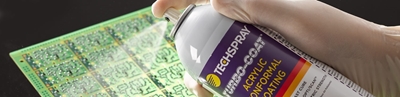

To successfully keep moisture out of electronic devices, manufacturers rely on a combination of protective coatings (like potting and conformal coating), specialized greases, and physical barriers like gaskets and silicone sealants.
The current development in technology has forced electronics to move out of offices and face environmental conditions in outdoor locations. Among all environmental factors, moisture is the cause of a vast majority of failures in electronics, and a major concern for electronics manufacturers. This guide breaks down the effects of moisture and the best strategies to waterproof your electronics.
Waterproof vs Water resistant
It is important to understand the difference between these two levels of protection before designing your moisture barrier.
| Protection Level | Permeability | Duration of Protection |
|---|---|---|
| Waterproof | The waterproof material is impermeable i.e., no water can enter or leave the material. | It provides protection for a longer period. |
| Water-Resistant | Water-resistant material is permeable. At high moisture levels, water-resistant material can be penetrated. | It will prevent water penetration to a certain level only. |
The Destructive Effects of Moisture on Electronics
Water layers reduce resistance, slow circuit speeds, distort the waveforms, and may induce delays in the electronic circuit. The conductive layers of water may cause corrosion and result in the complete failure of electronics in some cases. Water may come directly in contact with electronics, or it might be diffused, or the vapors are condensed due to an increased level of relative humidity (RH).
The ingress of water into electronics has the following specific effects [1]:
- It increases the dielectric constant.
- It initiates ionic corrosion.
- It causes the growth of tin whiskers.
Consequently, electronics enter the degradation process, which leads to intermittent faults followed by complete failure.
Real-World Examples of Water-Induced Failure:
- Fire in Samsung washing machines caused by corrosion instigated by moisture. Consequently, resistance and temperature increased ultimately resulting in fire [2].
- The crash of the U.S. Air Force’s B-2 Spirit bomber in Guam was due to the sensor, which received false readings because of the presence of moisture [2].
How to Keep Moisture Out of Electronics
1. Protective Coatings (Potting vs. Conformal Coating)
The fight against moisture in any electronic device starts by protecting PCBs and their components during the manufacturing process. The most adopted way of doing this is to use coating methods, specifically potting and conformal coatings.
- Potting: In potting, the PCBA is completely embedded in a potting material, which can be epoxy resins or gels of silicone/urethane. The potting method has its advantages in terms of high protection against heat, vibration, and electrical arcs and is the most suitable method for rough conditions and high-voltage electrical devices.
- Conformal Coating: The other approach, commonly employed, is to apply a thin conformal coating on the PCB surface. Although the materials used for both potting and conformal coating are the same, conformally coated PCBAs are lighter than their potted counterparts. The conformal coating method has its advantages in terms of reduced space and weight (form factor) of the final electronic product i.e., smartphones. The choice of conformal coating follows the IPC standard IPC-HDBK-830 for the appropriate material and application.
Note: Conformal coatings are not waterproof; in fact, they are semi-permeable and allow a small amount of moisture to penetrate. However, conformal coatings are very good at preventing current leakage and corrosion caused due to humidity.
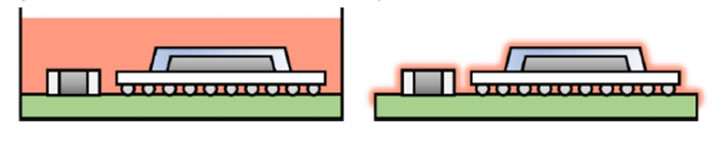
Figure 1: Potting vs conformal coating [2]
2. Protective Greases
Grease is another weapon against moisture and is mostly used in connectors, switches, relays, and sliding parts.
- Dielectric grease: Known to improve insulation and prevent electrical connection by providing a barrier to moisture intrusion. It is hydrophobic in nature and isn’t washed away with water. Dielectric grease is most suited in high voltage applications as it increases the breakdown voltage between insulators in the presence of moisture.
- Conductive grease: Prevents electrical connections from corrosion by keeping water away. Conductive greases are used in roller bearings as they prevent the build-up of static charge while providing protection against moisture. Conductive greases should never be used in high-voltage applications.
- Silicone grease: Waterproof and best suited for applications involving extreme environmental conditions. It can be used to protect high-voltage electrical components [3], and high-voltage power cables.
3. Gaskets, Silicone, and Enclosures
Once the moisture prevention steps at the component level have been executed, the next barrier to moisture is an enclosure that prevents the ingress of water into electronics’ circuitry. To prevent moisture from finding its way inside through tiny gaps, rubber gaskets are used to seal the enclosure lids while silicone is used to seal the glands made for the passage of wiring. Room Temperature Vulcanizing (RTV) silicone is sometimes used as a supplement sealer while repairing gaskets. RTV silicone is a very good barrier to moisture and lasts longer than silicone. Gaskets, RTV, and silicone make the enclosures waterproof in the true sense.
Understanding IP Ratings
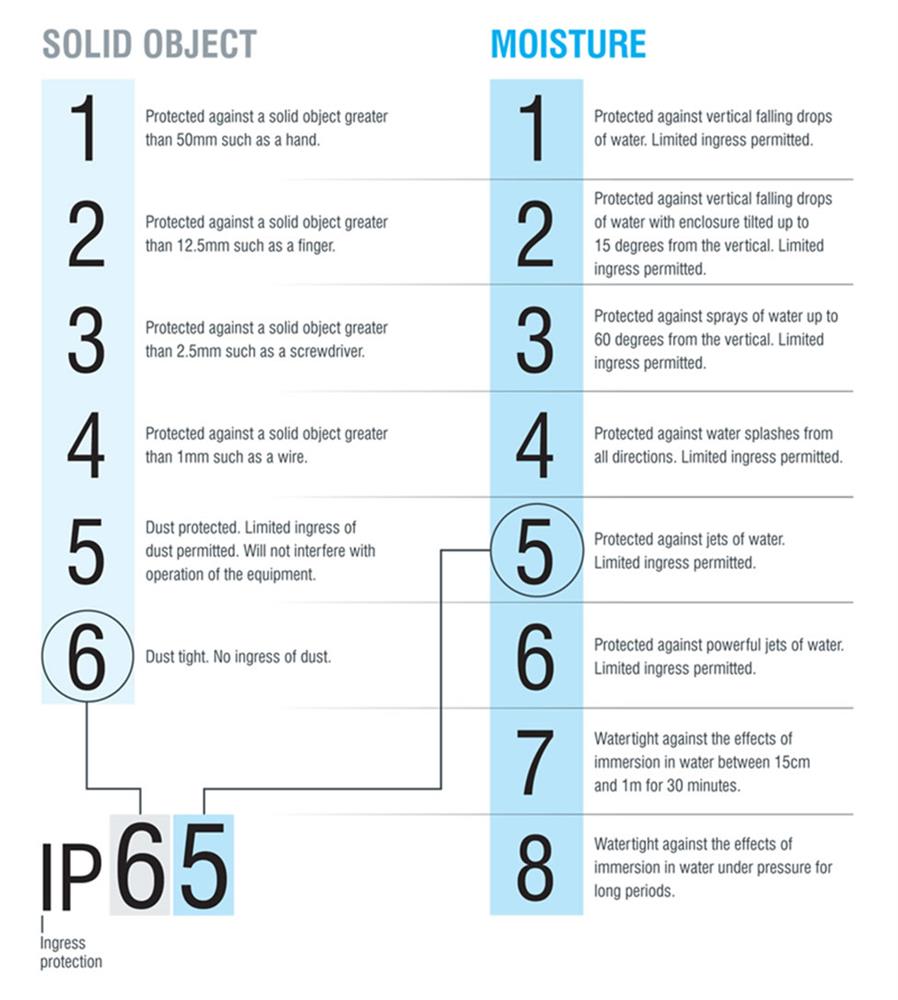
Electronics assemblies now use specific enclosures to guarantee dry operating conditions. The IP rating is an international standard (IEC 60529) that rates the degree of protection or sealing effectiveness in electrical enclosures.
- The first digit in the rating covers the susceptibility to solid objects (eg, wire or hand).
- The second digit in the IP rating indicates the level of moisture protection that the enclosure can provide.
Techspray's Line of Conformal Coatings
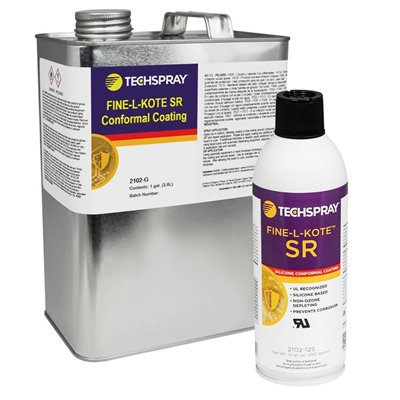
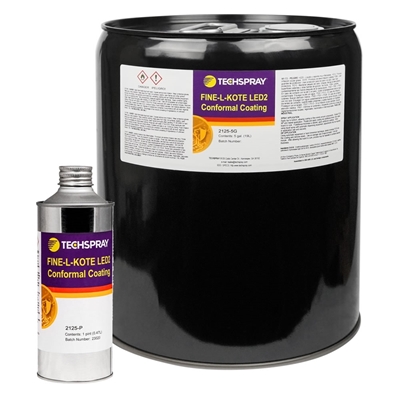
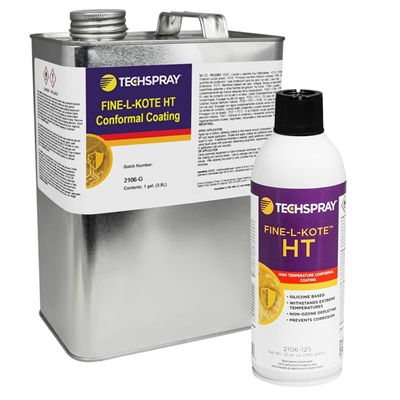
Techspray has been facilitating electronics manufacturers since 1968. Techspray’s extended line of conformal coatings protects the PCBAs from dirt, moisture, vibration, and thermal shocks, and provides excellent dielectric strength.
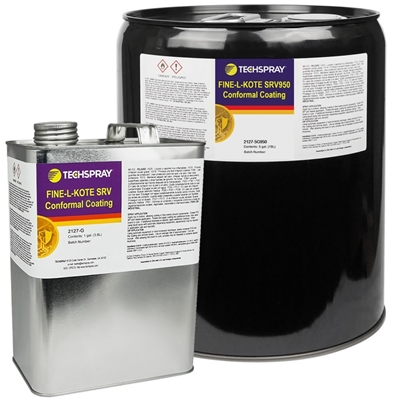
The Fine-L-Kote SRV Silicone Conformal Coating provides excellent protection in a very broad temperature range, finding its ideal application in high-humidity environments. The product is RoHS compliant and meets the IPC-CC-830B standard.
The Conformal Coating Selection Guide by Techspray facilitates PCB design engineers to select the product that best fits their requirements.
Frequently Asked Questions (FAQs)
Q: Are conformal coatings completely waterproof?
A: No, an important point to keep in mind is that conformal coatings are not waterproof; in fact, they are semi-permeable and allow a small amount of moisture to penetrate. However, conformal coatings are very good at preventing current leakage and corrosion caused due to humidity.
Q: What is the difference between potting and conformal coating?
A: In potting, the PCBA is completely embedded in a potting material, which provides high protection against heat, vibration, and electrical arcs and is the most suitable method for rough conditions and high-voltage electrical devices. Conformal coating involves applying a thin surface layer, which has advantages in terms of reduced space and weight (form factor) for the final electronic product.
Q: When should I use dielectric grease vs. conductive grease?
A: Dielectric grease is most suited in high voltage applications as it increases the breakdown voltage between insulators in the presence of moisture. Conductive greases are used in roller bearings to prevent the build-up of static charge while providing protection against moisture, but they should never be used in high-voltage applications.
Q: How do gaskets and silicone protect enclosures?
A: Rubber gaskets are used to seal the enclosure lids while silicone is used to seal the glands made for the passage of wiring. Room Temperature Vulcanizing (RTV) silicone is sometimes used as a supplement sealer while repairing gaskets because it is a very good barrier to moisture and lasts longer than silicone. Gaskets, RTV, and silicone make the enclosures waterproof in the true sense.