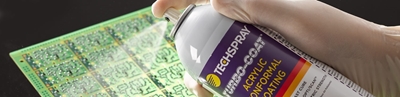
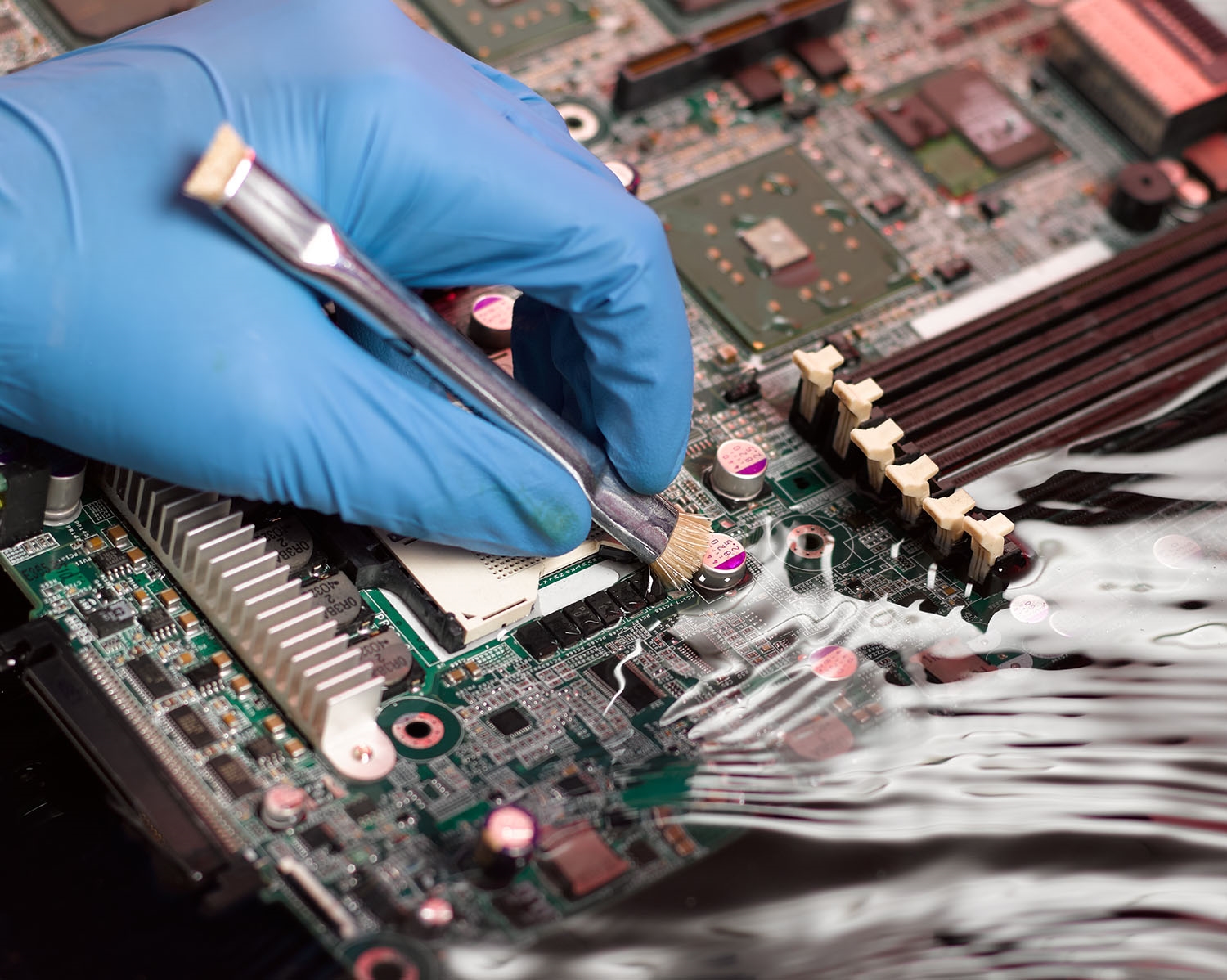
This procedure covers the methods to identify the conformal coating so that the ideal removal method can be identified and utilized, then presents a commonly-employed removal procedure with brief summaries of the other removal methods.
Coating Types & Identification
In order to identify the appropriate coating removal procedure you must first identify the coating employed. IPC-CC-830 has superseded MIL-46058 as the primary specification for conformal coatings on printed circuit assemblies.These coatings can be grouped into two categories, those able to be removed by chemical solvents and those which cannot:
- Can be removed by solvent: Conformal coatings made of acrylic are ideally suited for chemical removal. Silicone and polyurethane are also suitable materials, but may require manual agitation.
- Cannot be removed by solvents: Those coatings made of Epoxy and Parylene require physical (scraping, abrasion) rather than solvent removal methods.
If labels are not available or visible, you can use simple observation and testing to identify the coating characteristics sufficient to select the proper removal procedure.
| Coating Type | Identifier Code | Visual & Physical Characteristics |
|---|---|---|
| Acrylic Resin | AR | Glossy surface, reacts to heat, strong bond, and readily dissolves with common solvents. |
| Silicone Resin | SR | Semi-gloss rubbery surface, and soft so easily scraped off. |
| Polyurethane Resin | UR | Glossy hard surface that is more solvent resistant than AR. |
| Epoxy Resin | ER | Glossy hard surface that is solvent resistant. |
| Parylene | XY | Matte hard surface that is solvent resistant. Because it is applied by vapor deposition, it will be much more even over all surfaces and component corners. |
4 Ways to Test Your Coating:
- Hardness: Perform a penetration test in a non-critical area. If it is medium hard or soft, it is suitable for chemical solvent. If it is hard, it is not.
- Transparency: Transparent coatings are usually more suitable for removal than opaque coatings. Removal methods used with opaque coatings must be far more controlled to prevent damaging covered component and board elements.
- Solubility: In a small noncritical area, brush isopropyl alcohol and observe. Do not immerse printed board assemblies in harsh solvents in testing; some solvents can damage components.
- Visual Inspection: Inspect or use small tools to determine if the surface is glossy or dull, if it adheres strongly to the board, and/or is susceptible to chips, peeling or flaking, scratches or tears, or if it stretches.
The Best Ways to Remove Conformal Coating
Once you have identified your conformal coating material, you can best assess which removal method to utilize. Many commonly used conformal coatings require chemical solvents either in isolation or in tandem with another removal method.
| Removal Method | Best Suited For | Considerations |
|---|---|---|
| Chemical Solvent | AR, SR, and UR coatings. | Acrylic is ideally suited for solvent removal, while silicone, polyurethane and one-part epoxy benefit from chemical removal in combination. |
| Peeling | Thick SR. | The risks with this approach include damage to the sensitive components and leads. |
| Thermal | All coatings except thick SR. | Thermal removal is not sufficient on its own and may require solvent or abrasion. It can cause issues with sensitive components and adds unnecessary thermal stress. |
| Grinding / Scraping | XY, EP, UR, and thick SR. | It will almost certainly require a step prior to loosen the coating. Polyurethane and thin silicone in particular will benefit from a combined solvent-and-scrape approach. |
| Microblasting | XY and EP. | In nearly all cases, it wouldn't be an effective method in isolation. Either solvent or thermal aids would be needed as well. |
Step-by-Step: Removal by Chemical Solvent
Conformal coating resins generally require relatively harsh solvents to dissolve them. Aromatic solvents like toluene and xylene are commonly used. Acetone or hydrocarbons like hexane might also be used depending on the coating.
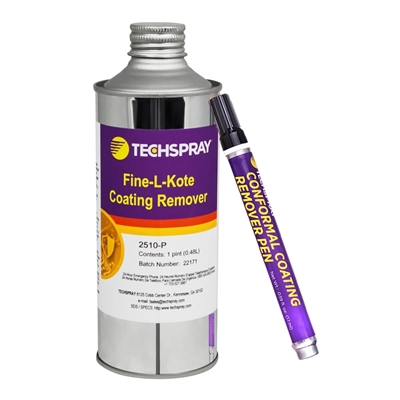
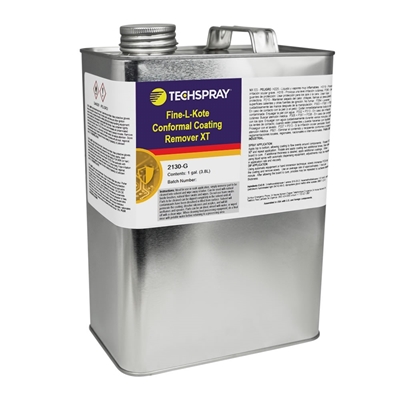
Techspray offers Fine-L Kote Coating Remover and Fine-L-Kote Coating Remover XT, which are specifically formulated to cut the widest variety of coatings including acrylic, silicone, and urethane. Note: Isopropyl alcohol (IPA), which is commonly found around most PCB repair areas, is usually not strong enough to break down conformal coating.
Safety & Setup Requirements:
- Container - To remove conformal coating from the entire circuit board, use a container made of stainless steel, and avoid aluminum and plastics, which can be affected by the harsh solvents.
- Ventilation -You will need very good ventilation to remove the fumes from your work area. An explosion-proof ventilation hood is an ideal choice.
- PPE (Personal Protection Equipment) - Use gloves made of a solvent-resistant material, like nitrile, and safety glasses or goggles. Consider a face shield if you plan to do a lot of scrubbing.
- UV Inspection Lamp – Most conformal coatings contain a UV tracer or brightener. The UV lamp should have a wavelength between 320-380 nm to easily inspect your work.
Procedure A: Coating Removal for Isolated Areas
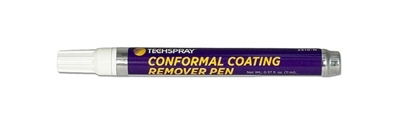
If all you are doing is replacing a component, or working on an isolated area, there are coating removers available in pen packaging, or you can use a conformal coating remover solvent with a swab, wipe, or brush.
Step 1 - Mask
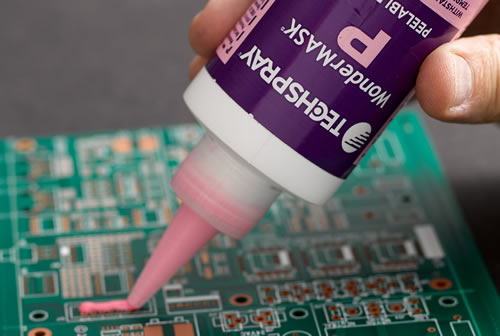
Mask any sensitive areas of the board or outline the area to be removed with polyimide tape or another suitable mask such as Wondermask temporary solder mask.
Step 2 - Prep Instrument
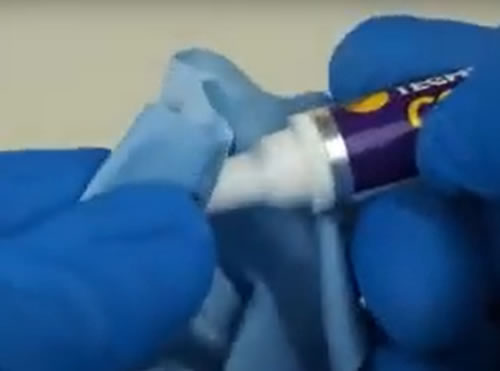
If using a Conformal Coating Remover Pen, saturate the pen tip by pressing it down on a hard surface several times. If using dry brushes or polyester knit swabs, dip them into a clean vial of solvent. (Note: Avoid nylon toothbrushes that generate static, foam swabs that swell, or cotton swabs that fray.)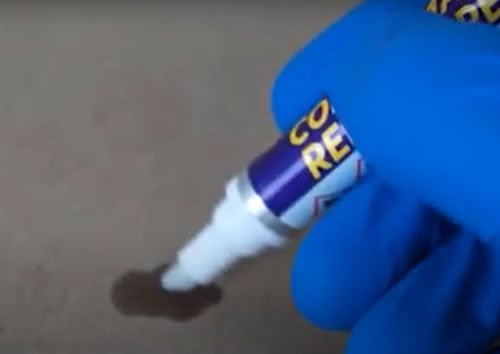
Step 3 - Scrub and apply
Simply scrub the surface you intend to strip with your solvent-soaked tool. You may have to allow the solvent to flow and sit on the board’s surface to give the solvent a chance to break down the coating.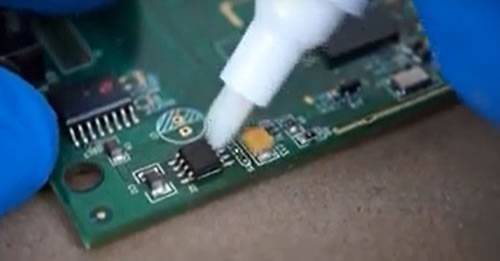
Step 4 - Maintenance
Note that coating resin can build up, so you will need to rub off the buildup onto polyester knit wipe material and resaturate the tip before continuing.
Procedure B: Coating Removal from Entire PCBA
In some cases, a more substantial part of the board needs to have the coating removed. In these cases, it’s much easier to remove the coating from the entire assembly or masking only discrete areas and immersing the assembly to remove the remainder.
Step 1 - Masking
If some portions of the board need to be protected from the solvent, mask them with polyimide tape or Wondermask.

Step 2 - Soak
Completely soak the board in the solvent for at least an hour. Acrylic tends to be the easiest and often fully dissolves, or only requires a minor amount of scrubbing.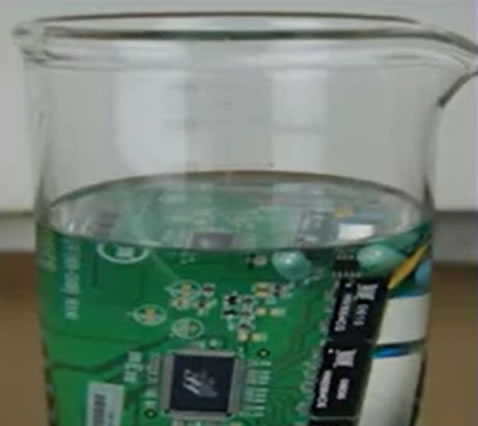
Step 3 - Scrub and Rinse
Lift the board, and rinse with fresh solvent. Scrub if needed, and allow the solvent to flow over the board. Silicone and urethane may require a long soak time and greater agitation. Don’t put the board back into the contaminated solvent.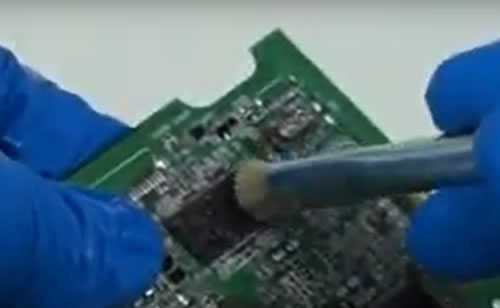
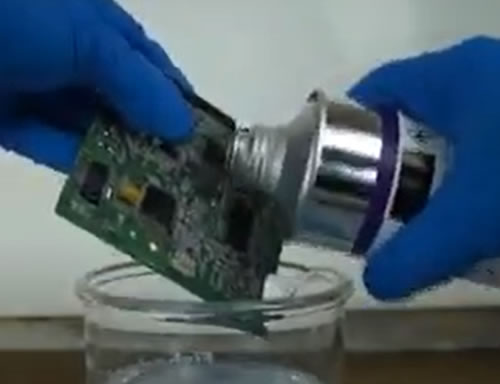
Step 4 - Repeat
Again, rinse with fresh solvent, and repeat as necessary.
Step 5 - Dry and Inspect
Allow the board to fully dry before plugging it back in. After it is dry, check your work under a UV “black light” inspection lamp to ensure both the coating has been removed as needed, and that no unintended damage has occurred.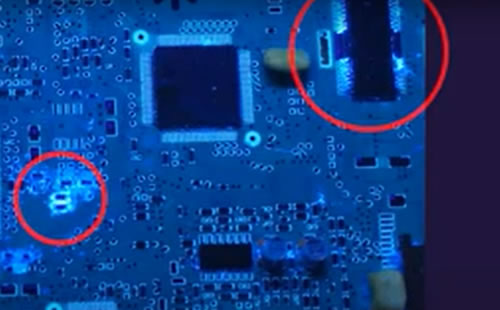
Frequently Asked Questions (FAQs)
Q: Can all conformal coatings be removed with chemical solvents?
A: No. Two-part epoxy and parylene are not suitable for chemical removal. Those coatings made of Epoxy and Parylene require physical (scraping, abrasion) rather than solvent removal methods. Acrylic is ideally suited for solvent removal, while silicone, polyurethane and one-part epoxy benefit from chemical removal in combination.
Q: Is thermal removal safe for conformal coatings?
A: Thermal tools can be suitable in part for many conformal coatings, including parylene, Epoxy, Acrylic, Polyurethane and thin silicone. However, it can cause issues with sensitive components and adds unnecessary thermal stress to the board substrate. For most use cases involving acrylic, silicone, and urethane the use of chemical solvents is the best universal method to remove coatings as they prevent the stress on the board from thermal or abrasive methods.
Q: What is the best way to verify that a conformal coating has been fully removed?
A: Most conformal coatings contain a UV tracer or brightener, so the coating glows under the ultraviolet (UV) spectrum of light. After the board is dry, you can check your work under a UV “black light” inspection lamp to ensure the coating has been removed as needed.
With over 40 years of experience in conformal coating, we’re ideally suited to advise you on the best product and approaches for your particular application. Techspray’s TechLab has state-of-the-art cleaning, coating and analytical equipment to help customers optimize their processes. For more information, check out our Essential Guide to Conformal Coating or contact us at 800-858-4043.