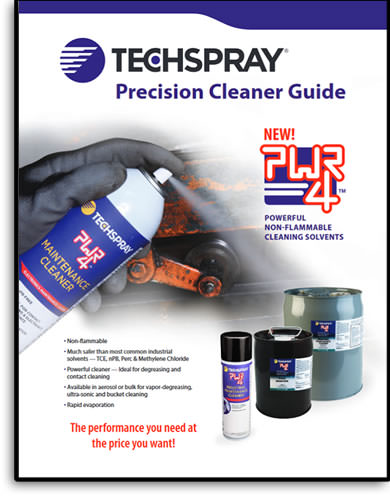
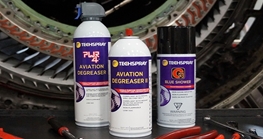
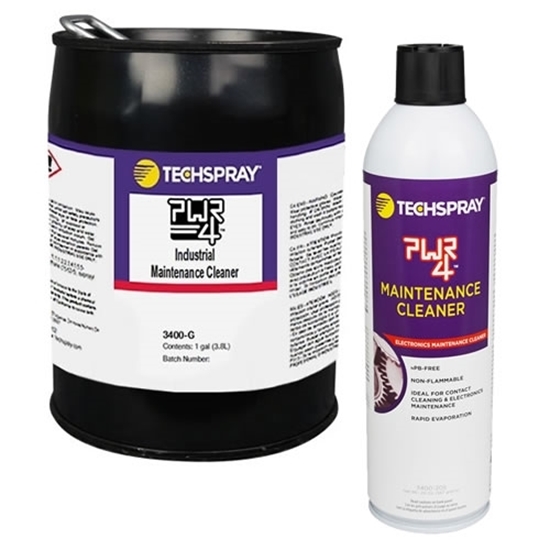
PWR-4 Industrial Maintenance Cleaner

Powerful, nonflammable & cost effective cleaner that is a safer nPB replacement

Part # Name Size Units
Per Case
Price
Per Case
Case
Qty
 
3400-20S PWR-4 Maint Cleaner - 20oz aerosol 20 oz aerosol 12 $565.68
3400-G PWR-4 Maint Cleaner - 1 gal 1 gal (3.8L) 1 $275.28
3400-5G PWR-4 Maint Cleaner - 5 gal 5 gal. 1 $965.34
3400-54G PWR-4 Maint Cleaner - 54 gal 54 gal (205L) 1 Call for pricing
Packaging Order minimum case quantity only. Extra shipping fees may apply.
Order from an authorized distributor

PWR-4... The Safer, Powerful n-Propyl Bromide (nPB) Replacement

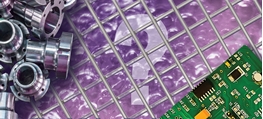
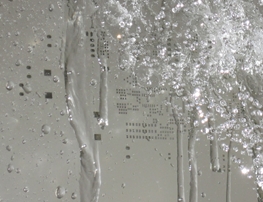
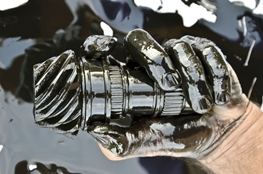
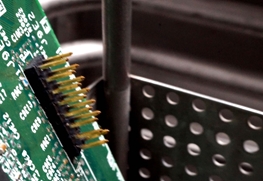
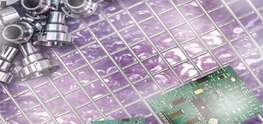
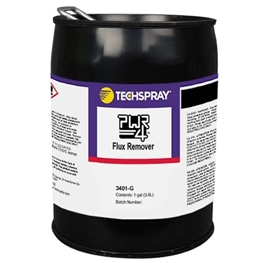
PWR-4™ Industrial Maintenance Cleaner Blasts away oil and contaminants off of contacts, printed circuit boards, barcode instruments, switch boxes, gear boxes, and electronic motor controllers. Grease and oil flow right off, reducing the time and materials needed to scrub off stubborn soils.

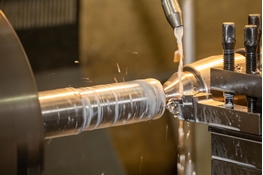
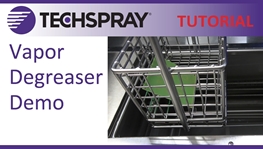
Ideal where a safer, nonflammable, and cost effective cleaner is required. This innovative solvent is much safer than the four most common industrial solvents: TCE, nPB, Perc and Methylene Chloride and quickly cleans the most difficult greases and oils from electronics, relays, and motors. It is engineered to remain stable and effective over thousands of cycles in vapor degreasing equipment.

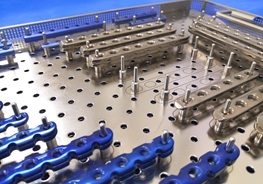
Removes oils, greases, silicones, refrigerant oils, fluxes, adhesives and other common industrial contaminants. Used for cleaning medical instruments, implants and other devices including orthopedic implants, monitoring devices, oxygen and gas lines. This solvent can be used as a carrier fluid like for silicone-based lubricant coatings.

  • Nonflammable
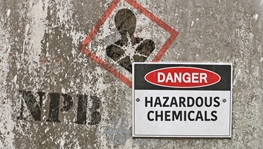
  • Much safer than most common industrial solvents — TCE, nPB, Perc & Methylene Chloride
  • Powerful cleaner — Ideal for degreasing and contact cleaning
  • Available in aerosol or bulk for vapor-degreasing, ultrasonic and immersion cleaning
  • Rapid evaporation
  • Non-ozone depleting
  • Cleaning applications: electronics, relays, switches & breakers, transformers, and electric motors and generators
  • NSF registered K1 and K2


Technical papers:

PWR-4 performance testing
Overview of health & safety impact of nPB and other toxic industrial cleaners
For more information, check out our The Expert’s Guide to Degreasers & Maintenance Cleaners.
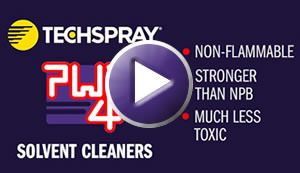
 

pwr-4
Click here for more info on PWR-4

Click here for Techspray's complete
solvent line brochure.

Vapor Degreaser Setting Guidelines

  • Boiling point – 118°F / 48°C
  • Boil sump temp set – 127°F / 53°C  
  • High solvent temp set – 136°F / 58°C
  • Refrigerant high temp set – 109°F / 43°C

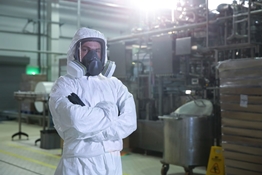
Note: As with all vapor degreaser equipment and processes, observe all safety precautions, guidelines and operating rules associated with these units. Failure to do so may put operations personnel at risk. Avoid excessive vapor losses, loss of refrigeration, excessive boil sump heat, etc. Make sure all equipment is operated in accordance with the manufacturer’s guidelines and instructions. If in doubt, contact your manufacturer immediately.


FAQ's

How do you know the safe exposure limit of a degreaser, contact cleaner, or flux remover?
The personal hazard associated with a solvent is often defined using Threshold Limit Value (TLV), which is the recommended average exposure in an 8-hour day, 40 hour work week. The lower the TLV of a particular substance, the less a worker can be exposed to without harmful effects. TLV is stated on the SDS of chemical products, in additional to recommended personal protection equipment (or PPE). The threshold limit value of a solvent is generally set by the American Conference of Governmental Industrial Hygienists (ACGIH). The unit of measure is Parts Per Million (PPM).
How do you use an aerosol cleaner?

Hold object to be cleaned in vertical position. Pull trigger gently to control solvent flow rate. Spray from top to bottom, allowing the liquid to flush away contaminants. 

There are a number of regulations prohibiting the use of chlorinated solvents. Should I be concerned with Trans, which is used in many of your nonflammable cleaners?

No, it should not be a concern. Many of Techspray's nonflammable solvents (e.g. G3, Precision-V, PWR-4) contain 1,2-trans-dichloroethylene (Trans, CAS# 156-60-5), which has caused confusion. The regulations controlling chlorinated solvents do not generally pertain to Trans. The following are the reasons: Many are confused with “chloro” substances due to the NESHAP requirements. The big 3 chlorinated substances are Perchloroethylene (Perc), Trichloroethylene (TCE), and methylene chloride. The association of those with all chlorinated substances is not valid. NESHAP requirements only refer to restrictions of emissions of hazardous air pollutants (HAP). Of the nearly 200 substances listed as HAP’s, Trans is not on that list. Reference the following link: https://www.epa.gov/haps/initial-list-hazardous-air-pollutants-modifications. Trans has the same exposure limit (per ACGIH) time-weighted average (TWA) as 2-propanol (IPA) -- 200 ppm. In contrast, n-Propyl Bromide (nPB) is commonly used in vapor degreasers, with TWA established by ACGIH of 10 ppm. It has been proposed to be reduced to 0.1 ppm. nPB is also listed on various carcinogen lists, notably Prop 65.

Articles

Finding a Replacement for TCE Degreasers
Looking for a replacement for TCE degreasers? Explore safe, high-performance alternatives like Techspray’s PWR-4™ solvents.
Read This Post

Understanding the EPA's TCE Ban Under the Toxic Substances Control Act (TSCA)
The EPA has banned all uses of TCE under TSCA. Learn about compliance deadlines, industry impact, & safer alternatives like Techspray’s TCE-free degreasers.
Read This Post

Techspray at Apex 2025 – Cutting-Edge PCB Cleaning & Repair Solutions at Booth #922
Visit Techspray at Apex 2025 in Anaheim, March 18-20! Stop by Booth #922 for a product showcase of PCB cleaners, repair pens, and WonderMASK solder mask.
Read This Post

More Articles

Videos

You did not finish submitting your information to request a sample